What Deck Builders in Austin, TX, Have to Plan Around That Colder Climates Don’t
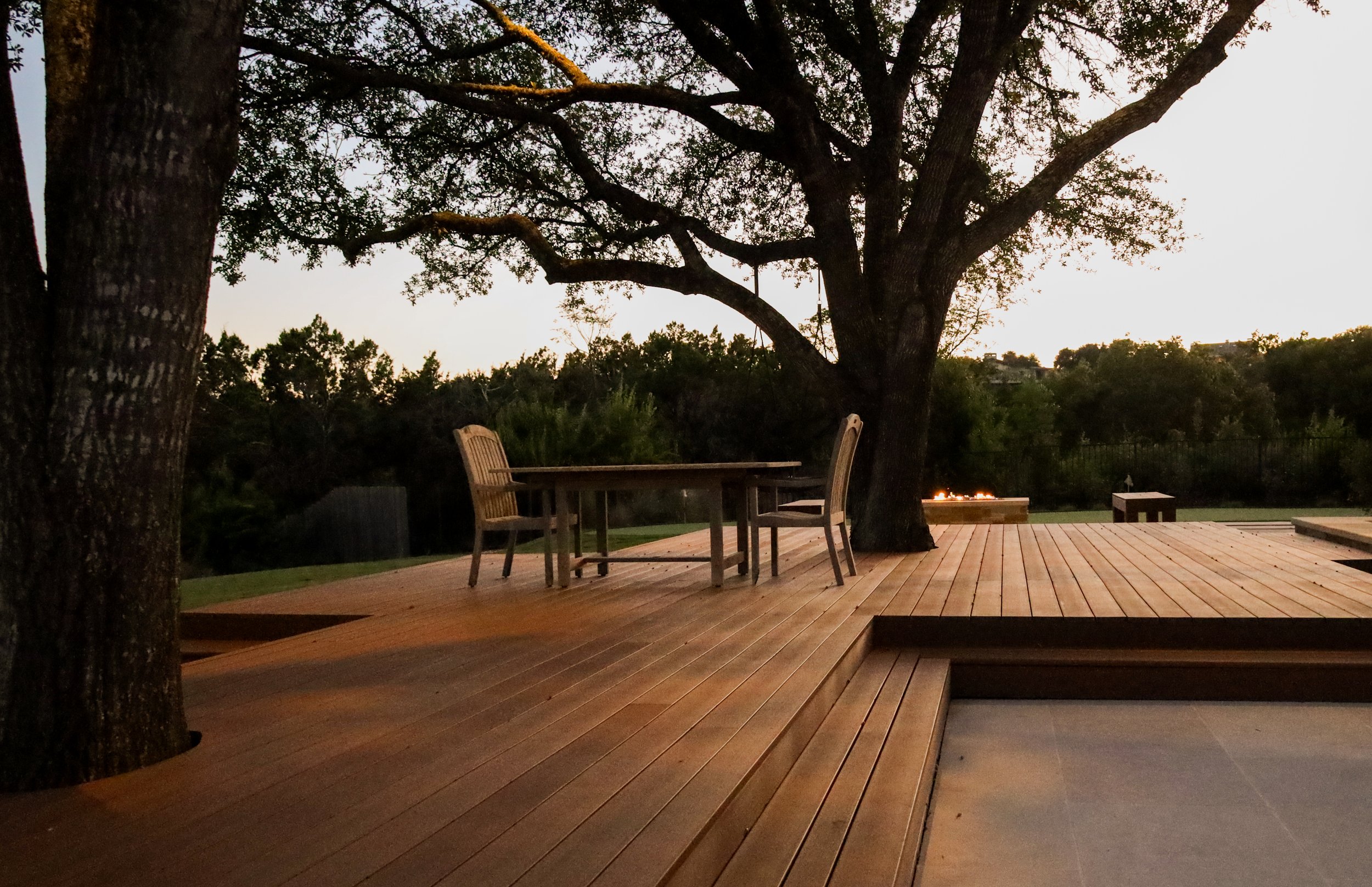
A deck design conversation in most parts of the country centers on snow load and winter freeze-thaw cycles. In Austin, TX, the calculation flips entirely for deck builders working in this climate.
Intense summer heat, direct sun exposure, and the Texas Hill Country's specific soil conditions drive most of the material and structural decisions. Ground & Garden has designed and built custom decks across Austin, West Lake Hills, Bee Cave, and the surrounding Central Texas and Hill Country communities for over three decades as a family-owned design-build company.
That longevity in one climate zone means the material and structural lessons learned on one Hill Country deck carry forward into the next, rather than starting from generic assumptions each time.
Related: Landscape Design vs. Landscape Architecture: Which One is Best for Your Barton Creek, TX Estate?
Material and Hardware Selection for Sustained Heat
Composite decking reaches uncomfortable surface temperatures under direct Texas sun, and certain wood species handle repeated heat and UV exposure better than others without excessive graying or checking.
A deck builder experienced with Central Texas conditions steers material selection toward options that hold up specifically to this climate, not just a generic national recommendation.
Texas humidity combined with sustained heat also accelerates corrosion on standard fasteners faster than a drier or cooler climate would. Hardware rated for this specific combination of heat and humidity protects the structure's connections from premature wear that isn't always visible until it's already a problem.
Orientation, Shade, and Airflow
A deck facing full western sun in Austin becomes unusable during exactly the hours a family wants to use it most. Planning orientation, or incorporating a pergola or shade structure as part of the deck design from the start, determines whether the finished space gets used through the hottest months or sits empty for most of the summer season.
Decking installed too close to the ground, or without adequate gaps between boards, traps heat and reduces airflow in ways that matter more in a hot climate than a cold one. Proper spacing and elevation planning keep a deck cooler to the touch and extend the usable hours during peak summer.
Related: How Landscape Design Reflects Modern Texas Living in Austin and Rollingwood, TX
Hill Country Soil and Terrain
Much of the Austin area sits on limestone-influenced soil that behaves differently than the clay or loam found in other regions, affecting how footings get engineered and how a sloped Hill Country lot gets approached structurally. A builder familiar with this specific terrain plans footings and support structures around what the actual soil and grade require.
That terrain knowledge matters most on the steeper Hill Country lots around West Lake Hills and Bee Cave, where a footing plan copied from a flatter Austin property would need significant rework to hold up correctly. Confirming grade and soil composition before finalizing the footing layout avoids that rework after construction has already started.
Building for Austin's Actual Climate, Not a Generic Standard
A deck that holds up and stays usable through an Austin summer starts with material, orientation, and hardware decisions made specifically for this climate, not a generic national building standard. Getting those decisions right up front is what keeps a deck comfortable and structurally sound season after Texas season.
Ground & Garden brings three decades of Central Texas design-build experience to every deck project, planning around the region's heat, sun, and terrain from the very first conversation. That climate-specific approach is what separates a deck that stays comfortable and structurally sound through a Hill Country summer from one built to a generic national standard.
Contact Ground & Garden to schedule a deck design consultation and get a plan built around Austin's specific climate and terrain.
Related: How to Create an Outdoor Living Space in Austin That Feels Comfortable Year-Round