Avoid These 4 Outdoor Fireplace Design Mistakes in Austin, TX
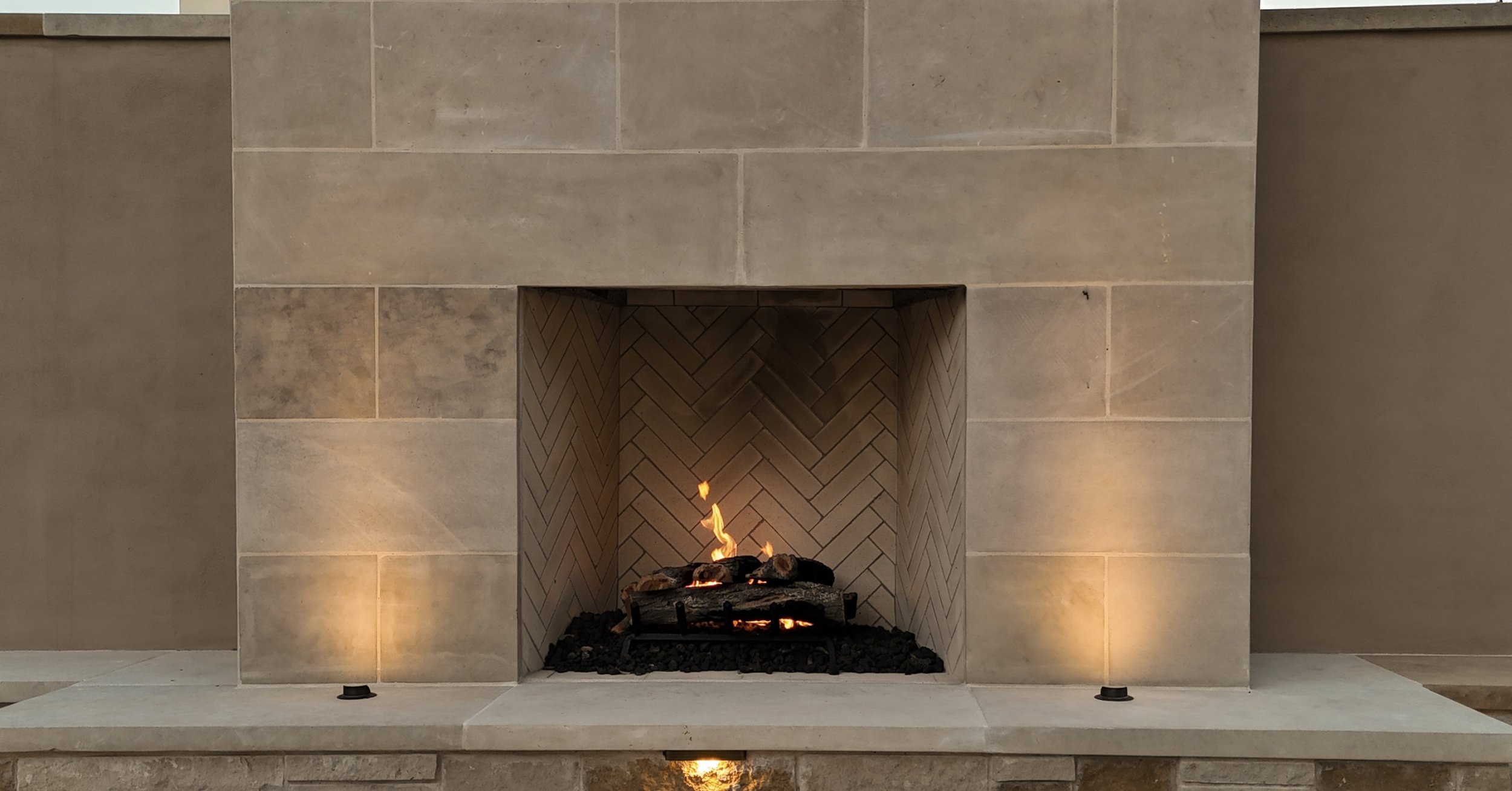
An outdoor fireplace can anchor a well-designed backyard, but small missteps early in the process often lead to frustration later. In Austin, TX, where temperature swings, sun exposure, and seasonal use all matter, an outdoor fireplace requires thoughtful planning. We approach each outdoor fireplace as part of a larger layout, making sure it supports how the space will actually be used rather than just how it looks.
Related: Make the Most of Texas Winters With a Cozy Outdoor Fireplace in Fredericksburg, TX
Ignoring the Proper Placement of the Outdoor Fireplace
One of the most common outdoor fireplace mistakes starts with placement. We often see an outdoor fireplace positioned based on symmetry alone, without considering wind direction, seating orientation or how people move through the space. In our area, prevailing winds and intense afternoon sun can quickly make an outdoor fireplace uncomfortable if it faces the wrong direction.
We design outdoor fireplace layouts that align with how gatherings naturally happen. That means orienting seating to take advantage of shade structures, placing the outdoor fireplace where it complements nearby patios or outdoor kitchens, and ensuring it does not disrupt circulation between walkways and gathering areas. When placement works, the outdoor fireplace becomes a natural extension of the space instead of an obstacle.
Choosing the Wrong Materials for an Outdoor Fireplace
Material selection plays a major role in how an outdoor fireplace performs over time. An outdoor fireplace built with the wrong materials can struggle with heat retention, surface wear or visual inconsistency with surrounding features. We focus on materials that respond well to the local climate while maintaining a cohesive look.
Natural stone remains a strong choice for an outdoor fireplace because it handles temperature changes and blends with surrounding plantings and structural elements. We also consider how the outdoor fireplace ties into nearby patios, seating walls, and walkways. When materials feel disconnected, the outdoor fireplace can appear like an afterthought instead of an integrated feature.
Related: Elevate Your Outdoor Living in Downtown Austin, TX, With a Patio & Outdoor Fireplace
Oversizing or Undersizing the Outdoor Fireplace
Scale often gets overlooked during the design process. An outdoor fireplace that is too large can overwhelm the space, while one that is too small may not provide the presence or warmth expected. We evaluate the proportions of the backyard, nearby structures, and seating areas before finalizing the size of the outdoor fireplace.
A well-scaled outdoor fireplace balances visual weight with functionality. It should anchor the seating area without dominating it. We also consider ceiling heights if the outdoor fireplace sits beneath a pergola or pavilion, ensuring proper proportions across all elements. Getting this right creates a more comfortable and visually balanced environment.
Forgetting How the Outdoor Fireplace Connects to the Space
An outdoor fireplace should never feel isolated. Another common mistake is treating the outdoor fireplace as a standalone feature instead of part of a cohesive layout. We see this when there is no clear connection between the outdoor fireplace and nearby patios, plantings, or seating areas.
We design outdoor fireplace spaces with intentional flow. That includes aligning walkways to guide movement toward the outdoor fireplace, layering plantings to soften edges, and integrating nearby features like seating walls or outdoor lighting. The outdoor fireplace should feel like it belongs within the overall composition, not placed randomly at the edge of the backyard.
When we approach an outdoor fireplace as part of a complete design, it enhances how the entire space functions. Each decision, from placement to material to scale, supports a more cohesive and usable outdoor environment.